Home › Commercial Concrete Slabs and Flatwork
Install smooth, durable commercial concrete slabs in Las Vegas, NV for warehouses, retail floors, and exterior flatwork. We use proper reinforcement, joint layouts, and finishing methods to reduce cracking and curling. Our team delivers flat, level surfaces that stand up to traffic and heavy loads. Request a free quote for commercial slabs and flatwork.
Superior Concrete Las Vegas provides professional commercial concrete slab throughout Las Vegas, NV, Nevada and the surrounding area. Our licensed, insured crew delivers safe, clean, on-time work with a free estimate before anything begins. Call (725) 307-4971 or request your free quote.
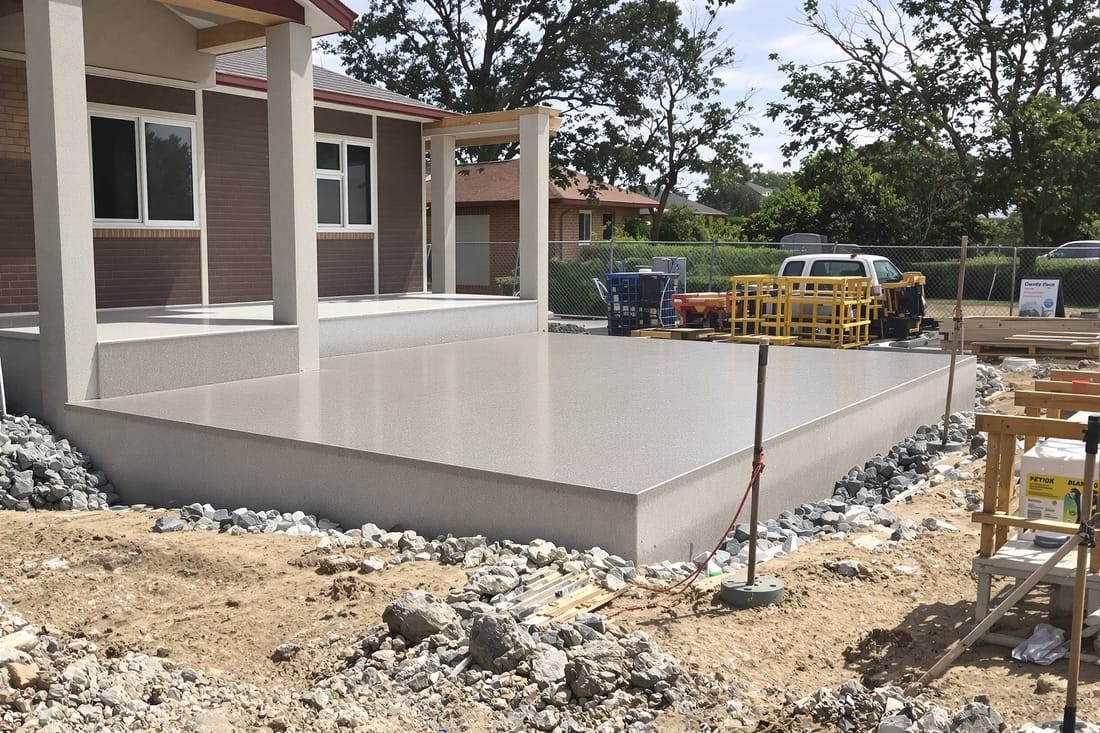
Commercial Concrete Slabs in Las Vegas That Stay Flat and Strong
Commercial projects in Las Vegas put concrete slabs under serious stress. Heat, heavy foot traffic, pallet jacks, forklifts, delivery trucks, and shifting desert soils can all cause cracking or settlement if the slab is not designed and built correctly. At Superior Concrete Las Vegas, we focus specifically on commercial concrete slabs and flatwork that hold up to Nevada conditions, not just look good on opening day.
We work with property owners, general contractors, facility managers, and HOAs throughout the valley to install new slabs and replace failed ones. Typical projects include warehouse floors, retail store slabs, restaurant patios and walkways, dumpster and loading pads, parking lot flatwork, and thickened-edge slabs for equipment or generator pads. Each use has different load demands, reinforcement needs, and surface finishes, so we start by understanding how your slab will actually be used.
From the beginning, our team looks at your site soils, drainage, and access, along with any existing concrete issues on the property. That lets us recommend realistic slab thickness, reinforcement, and joint layouts that match Las Vegas clay soils and our big temperature swings. The goal is simple: a commercial concrete slab that stays functional and safe with minimal maintenance over many years.
How We Plan Your Commercial Concrete Slab or Flatwork
Every successful commercial concrete slab starts with planning. Our estimator visits your site anywhere in the Las Vegas area, takes measurements, checks elevation changes, and looks for utilities, irrigation lines, and existing structures that may affect the work. If you have structural drawings, we review them, and if you do not, we can propose a practical slab design based on local standards.
During planning we discuss how the slab will be used. For example, a warehouse with forklifts or pallet racking usually needs a thicker slab (often 6 inches or more) with heavier reinforcement than a pedestrian courtyard that will only see foot traffic. Outdoor patios in Las Vegas sun may benefit from lighter colors or microtexture finishes to reduce glare and heat. Walkways near entrances might require broom finishes for slip resistance and ADA compliant slopes.
We also consider drainage and stormwater. In the valley, sudden monsoon rains can pond quickly on flatwork if slopes are not carefully laid out. We calculate fall toward drains, parking lots, or landscaped areas so water sheds off the slab instead of running toward door thresholds or neighboring properties. When needed, we coordinate with your civil engineer or designer to fine tune elevations and concrete transitions.
Before work begins, we clarify logistics: where trucks can stage, acceptable working hours, how to maintain access for customers or tenants, and whether we need to phase the pour so your business can stay open. This planning step reduces surprises and helps us complete the slab efficiently and safely.
Our Installation Process: From Subgrade to Finished Surface
A commercial concrete slab is only as good as what is underneath it. We begin by excavating to the designed depth and removing organics, loose fill, and any old broken concrete that might cause differential settlement. In many Las Vegas locations the existing soil is a mix of compacted fill and native desert material, so we proof-roll and compact the subgrade to a specified density to minimize future movement.
Next, we install the base layer, typically a compacted aggregate or road base. This helps with drainage under the slab and spreads loads more evenly. For interior commercial floors or food service areas, we may also place a vapor barrier over the base, depending on building requirements and flooring products that will be installed later.
Reinforcement is set according to design. This can include rebar grids, post-tension cables, or welded wire mesh. For heavy duty applications like loading docks and dumpster pads, we usually recommend #4 or #5 rebar in tighter spacing and thicker slab sections. Our crew chairs the reinforcement so it stays in the correct position during the pour, rather than settling at the bottom.
We then form the slab edges and layout control and construction joints. Proper joint spacing is critical in Las Vegas because temperature swings from hot afternoons to cooler nights cause concrete to expand and contract. Well planned joints help control where the concrete cracks so random crack patterns are minimized. During the pour we place, vibrate, and strike off the concrete so it consolidates around reinforcement and fills all corners and edges. Finishing follows immediately, tailored to the type of flatwork you need.
Finally, we apply curing methods suited to the season. In the dry desert air, uncontrolled evaporation can cause surface cracking and reduced strength, so we often use curing compounds, wet curing, or temporary coverings to help the slab gain proper strength over the first week.
Concrete Mixes, Finishes, and Options for Las Vegas Businesses
Not every commercial concrete slab uses the same mix or finish. In Southern Nevada, we typically use higher strength concrete mixes than what might be used in cooler climates, often 4000 psi or more for commercial applications. This provides better durability under forklift traffic and thermal movement.
We also adjust slump and set times based on temperature. In summer, we often specify retarding admixtures so the concrete does not set too quickly in the heat, which allows proper finishing and reduces the risk of surface defects. Air entrainment may be used where there is occasional exposure to deicing salts or where freeze-thaw exposure is possible, such as raised slabs near cold storage areas.
For finishes, commercial flatwork can be tailored to function and appearance. Broom finishes provide traction on exterior walkways and ramps. Hard troweled or burnished finishes are common in warehouses, storage facilities, and back-of-house areas where a smooth, cleanable surface is needed. For retail patios and entries, we can install decorative options like integral color, saw-cut patterns, or exposed aggregate, as long as the design does not conflict with ADA slip resistance requirements.
We also offer surface hardeners and sealers for high traffic areas. Densifiers and sealers can help reduce dusting and make cleaning easier in warehouses and automotive or manufacturing spaces. For restaurant patios and public plazas, we can apply sealers that provide stain resistance and easier gum removal. During our consultation, Superior Concrete Las Vegas will explain the tradeoffs of each option so you get the right balance of durability, safety, and appearance.
What Drives Cost and How We Help You Stay on Budget
Commercial concrete slab pricing in Las Vegas depends on more than just square footage. Thickness, reinforcement type, site conditions, access, and schedule all play major roles. A wide open parking lot slab with easy truck access will cost less per square foot than a tight inner courtyard that requires small loads or pump trucks and extensive hand work.
Slab thickness and reinforcement are two of the biggest cost drivers. A 4 inch walkway with light mesh has much less material and labor than a 6 to 8 inch warehouse slab with rebar in two directions. If soil conditions are poor or previous construction left debris under the surface, additional excavation or base material may be required. We always explain these conditions clearly, often with photos from the site visit, so you understand why certain line items appear in the estimate.
Scheduling can also influence cost. Night pours or weekend work are sometimes necessary for busy commercial centers or operating warehouses so customer access can be maintained. These special hours may increase labor costs, but they can save money in lost business or tenant disruption. Superior Concrete Las Vegas works with you to phase the work, create temporary walkways, or pour in sections so tenants and customers are not completely shut out.
We are transparent about change orders. If hidden issues appear, such as unmarked utilities or unsuitable fill, we pause, show you the problem, and present options. Often we can suggest targeted fixes, such as localized soil stabilization or adjusting joint layouts, instead of full redesigns. This collaborative approach helps owners and contractors keep projects on schedule and within realistic budgets.
Local Codes, Inspections, and How We Avoid Common Problems
Clark County and the City of Las Vegas have specific requirements for commercial concrete work, especially for new buildings, accessible routes, and structural slabs. Superior Concrete Las Vegas is familiar with local codes, typical inspector expectations, and the documentation general contractors need for their records.
For projects that require permits, we coordinate with your design team or handle the submittal of mix designs, reinforcement details, and joint layouts, as needed by the jurisdiction. We schedule inspections for pre-pour checks, then ensure inspectors can see reinforcement placement, vapor barriers, and base preparations before concrete is placed. Our crews are used to working with county and city inspectors and understand what typically causes delays, such as missing chairs, improper compaction, or inadequate slope to drains.
We also help you avoid the most common slab and flatwork problems in our region. These include random cracking from poor joint spacing, surface scaling from improper curing, and trip hazards due to slab settlement at edges and around utility boxes. By addressing subgrade prep, joint layout, and curing in our process, we significantly reduce the chances of these issues. When replacement is needed around existing utilities, we cut and pin new concrete to old correctly, so transitions remain stable.
For properties governed by HOAs or commercial centers with design guidelines, we can match existing slab thicknesses, finishes, and colors. This is especially important for common areas such as shared walkways, pool decks, or community plazas. Before we start, we can attend on-site meetings with your property manager or board representative to confirm details so approvals move smoothly.
Whether you are planning a new building pad, a warehouse floor, or a complex mix of sidewalks, patios, and loading areas, Superior Concrete Las Vegas brings local experience and a practical approach to commercial concrete slabs and flatwork. We focus on building slabs that your business can trust and that inspectors, tenants, and customers will accept the first time.